

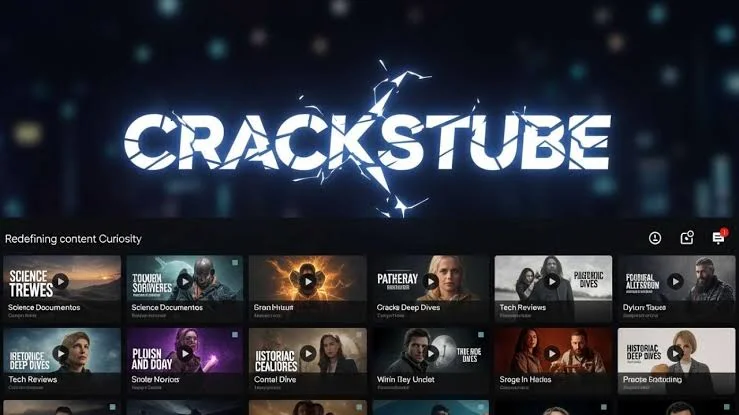
Search behavior often looks more complicated than it really is. People may type a website name alongside words such as “keyword,” “search,” “menu,” or “website” because they want to find a particular section, understand how a platform works, or locate content more efficiently. The phrase keyword crackstube keyword crackstube crackstube appears to follow this kind of navigational search pattern.
Rather than treating a repeated search phrase as a conventional informational keyword, it helps to understand the intent behind it. Users searching for Crackstube-related terms may be trying to locate the website, understand its categories, find a particular feature, or learn how to browse more privately.
That makes website navigation, privacy, browser security, and responsible online behavior important parts of the conversation.
Understanding the Search Intent Behind Keyword Crackstube
A repeated phrase such as “keyword Crackstube” does not necessarily represent a request for detailed information about a specific topic. It may simply be a navigational query.
Navigational searches happen when someone already has a destination in mind. Instead of typing a broad phrase into a search engine, the user combines a brand or website name with another term that helps identify what they want.
For example, searches might include:
“Crackstube website”
“Crackstube search”
“Crackstube menu”
“Crackstube keywords”
“Crackstube categories”
These variations can indicate that the user is looking for a specific part of the website rather than researching the broader subject.
Understanding that distinction is important for publishers because an article designed for informational intent may not satisfy someone who simply wants to navigate to a particular destination.
Why Users Repeat Website Keywords
Repeated words in a search query can have several explanations.
One possibility is that the searcher is trying to make the website name more prominent. Another is that the user is experimenting with different search combinations to locate a particular page.
Search engines generally attempt to understand the meaning behind a query rather than simply counting how many times an individual word appears. As a result, repeating the same phrase does not automatically make a page more relevant.
A useful article should therefore focus on the underlying purpose of the search.
If someone searches for Crackstube-related keywords, the most useful information may involve navigation, account considerations, privacy, browser settings, and general website safety rather than repeating the same phrase throughout a page.
How Website Navigation Typically Works
Most content platforms organize information through several basic navigation elements.
A homepage usually provides access to major sections. Category pages group similar content together, while search tools allow visitors to enter terms and narrow results.
Depending on the website, users may also encounter tags, filters, menus, pagination, or recommendation systems.
Understanding these elements makes browsing more efficient.
Search Features
A website search box is generally useful when someone knows approximately what they are looking for. Instead of opening multiple pages manually, the visitor can enter a relevant term and examine available results.
Search quality can vary considerably between websites. Some platforms support filters or sorting, while others provide relatively simple keyword matching.
Categories and Tags
Categories provide broader organization. Tags can offer a more specific way to connect related pages.
For users, these systems can make navigation easier. For publishers, they also provide clues about how visitors understand the structure of a website.
Menus and Internal Links
Navigation menus help users move between major areas of a website. Internal links serve a similar purpose by connecting related pages.
A well-organized website should make important sections easy to find without requiring visitors to repeatedly return to the homepage.
Privacy Matters When Visiting Adult-Oriented Websites
Privacy deserves particular attention when browsing any adult-oriented platform.
Websites can use cookies, analytics technologies, advertising systems, and other mechanisms that may collect information about browsing activity. The exact practices vary from one website to another, so visitors should review the site’s privacy policy where available.
A few general precautions can reduce unnecessary exposure.
Using a browser with privacy controls enabled can help limit tracking. Visitors should also avoid entering unnecessary personal information into unfamiliar websites.
It is especially important not to provide sensitive information simply because a page requests it.
Browser Security Is More Important Than Keyword Selection
People searching for a particular website sometimes focus heavily on finding the correct domain while overlooking security.
That can create problems because search results may contain unofficial copies, misleading advertisements, or unrelated pages using similar terminology.
Before interacting with an unfamiliar website, check the domain carefully. HTTPS is useful because it encrypts the connection between the browser and the website, although HTTPS alone does not prove that a website is trustworthy.
Visitors should also keep their browser, operating system, and security software updated.
These basic measures are useful across the internet, not only when browsing adult-oriented websites.
Avoid Suspicious Downloads and Pop-Ups
One of the simplest online-safety rules is to avoid downloading files that you did not intentionally request.
Unexpected browser notifications, executable files, fake update messages, and aggressive pop-ups can all create security risks.
If a page suddenly claims that a browser, video player, or security application must be updated, users should obtain updates directly from the official software provider rather than clicking an unfamiliar advertisement.
The same principle applies to extensions. Browser keyword crackstube keyword crackstube crackstube extensions should only be installed when their purpose and publisher are clear.
Be Careful With Login Requests
Some websites offer accounts, while others allow visitors to browse without registration.
When an account is required, users should consider whether providing personal information is actually necessary.
Password reuse is another important concern. A password used for an entertainment website should not also be used for email, banking, social media, or other important services.
Using unique passwords and a reputable password manager can make account security substantially easier to manage.
Two-factor authentication is also worth enabling when a website offers it.
How Search Engines Handle Repeated Keywords
The phrase keyword Crackstube illustrates a broader SEO principle: repetition is not the same as relevance.
Modern search systems evaluate many signals when attempting to understand a page. Context, related terminology, page structure, usefulness, and the relationship between the content and the search query all matter.
A page that repeatedly inserts an exact phrase can become difficult to read without providing additional value.
For publishers, a better approach is to address the actual questions surrounding the search.
For example, an article targeting Crackstube-related searches could naturally discuss:
Website navigation
Search behavior
Privacy considerations
Browser security
Account safety
Suspicious links
Cookies and tracking
Responsible browsing
This creates a more useful resource than repeating the same keyword dozens of times.
What Makes a Useful Navigational Guide?
A good navigational guide should answer practical questions quickly.
Readers should be able to understand what the website or search term refers to, why people might search for it, and what precautions are worth considering.
The information should also be written in straightforward language.
There is no benefit in filling a page with unnecessary technical terminology when a simple explanation would work better.
Clear headings, short paragraphs, descriptive titles, and logical internal organization can all improve usability.
Common Mistakes When Searching for a Website
Several mistakes occur frequently when people search for unfamiliar websites.
The first is clicking the first result without checking the destination. Search results can include advertisements, third-party pages, mirrors, and unrelated websites.
The second is entering personal information too quickly.
The third is downloading software or browser extensions simply because a website suggests doing so.
Another common mistake is assuming that a familiar-looking domain is automatically legitimate.
Checking the address bar and paying attention to unusual domain variations can help users avoid deceptive pages.
Protecting Personal Information Online
Privacy is not limited to passwords.
Personal information can include email addresses, phone numbers, names, payment details, location information, and account credentials.
Users should consider whether a website actually needs this information before submitting it.
It is also wise to review browser permissions. Websites may request access to notifications, location data, cameras, microphones, or other browser features.
If a permission does not serve an obvious purpose, declining it may be appropriate.
FAQ About Keyword Crackstube
What does “keyword Crackstube” mean?
It appears to be a navigational-style search phrase combining the Crackstube name with the word “keyword.” The exact intention depends on the individual searcher, but it may indicate an attempt to locate or understand the website.
Why would someone search for Crackstube keywords?
A user may be trying to find a particular section, search feature, category, or website destination. Repeated terms can also result from users experimenting with different search queries.
Is keyword repetition important for SEO?
No. Repeating an exact keyword excessively does not automatically improve search visibility. Useful context, relevance, readability, and satisfying the user’s intent are more important considerations.
Should visitors provide personal information to an unfamiliar website?
Visitors should be cautious about sharing personal information with unfamiliar websites. Information should only be provided when there is a clear reason and the site’s privacy and security practices are understood.
How can users improve browser privacy?
Users can review cookie settings, notification permissions, tracking controls, and browser privacy settings. Keeping the browser updated is also an important security practice.
Is HTTPS enough to prove that a website is safe?
No. HTTPS protects the connection between a browser and a website, but it does not by itself establish that the website is legitimate or trustworthy.
Should users download files requested by a website?
Only when they intentionally need the file and can verify where it comes from. Unexpected downloads and fake software-update prompts should be treated cautiously.
Are repeated search terms a sign of spam?
Not necessarily. People sometimes repeat words because they are trying to locate a specific website or page. The context and purpose of the search matter.
What should someone do if a website behaves suspiciously?
Close suspicious pages, avoid downloading unknown files, and do not provide passwords or sensitive information. If an account may have been compromised, changing the password from a trusted device and reviewing account security settings can be appropriate.
Why is search intent important when creating content?
Search intent helps publishers understand what a person actually wants to accomplish. A navigational query generally needs a different type of content from an informational or transactional query.
Final Thoughts
The search phrase keyword crackstube keyword crackstube crackstube is best understood as a potentially navigational query rather than a phrase that needs to be repeated throughout an article.
For users, the more important considerations are finding the intended destination, recognizing potentially misleading search results, protecting personal information, and maintaining good browser security.
For publishers and SEO professionals, the lesson is equally straightforward: useful content should address the meaning behind a search instead of relying on mechanical keyword repetition.
Whether someone is looking for a website, a category, a search function, or general information, clear navigation and responsible browsing practices provide more lasting value than keyword density alone.

One thought on “keyword crackstube keyword crackstube crackstube Guide to Search Navigation and Online Safety”
Comments are closed.