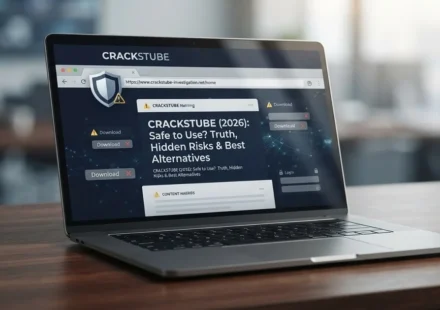
Safety safety crackstube How to Stay Safe on Unfamiliar Websites
Safety safety crackstube The internet makes it easy to discover new websites, download software, stream content, and explore unfamiliar online services. However, convenience can also create security risks when a website has an unclear reputation or encourages visitors to download files, disable security protections, or provide personal information.
Searches involving terms such as “Safety safety crackstube” often reflect a broader question: Is it safe to visit an unfamiliar website, and what should users look for before trusting it?
The answer depends on several factors, including the site’s reputation, the type of content it provides, its download behavior, advertising practices, privacy policies, and how it handles user information. A familiar-looking interface or a working website does not automatically mean that a site is trustworthy.
Understanding the warning signs can help users protect their computers, phones, accounts, and personal data.
Table of Contents
ToggleWhy Website Safety Matters
Website security is about more than whether a page opens correctly. A website can expose visitors to risks through malicious advertisements, deceptive buttons, unwanted downloads, phishing pages, tracking technologies, or compromised files.
These risks can affect both computers and mobile devices.
For example, a visitor might click what appears to be a normal download button and instead receive a potentially unwanted application. Another common situation involves a website displaying a fake browser notification claiming that the device is infected and needs immediate action.
The safest approach is to treat unfamiliar websites cautiously until their legitimacy has been established.
What Makes an Unfamiliar Website Risky?
Several characteristics can increase the security risk associated with a website.
Unexpected Downloads
One of the clearest warning signs is a website that attempts to download a file without the user intentionally requesting it.
Unexpected executable files, browser extensions, compressed archives, Safety safety crackstube or installation packages deserve particular caution.
Users should never assume that a downloaded file is safe simply because its filename looks familiar.
Aggressive Pop-Ups and Redirects
Some websites use aggressive advertising networks that can open new tabs or redirect visitors to unrelated pages.
A redirect by itself does not prove that a site is malicious, but repeated redirects to suspicious domains should be treated as a warning sign.
Particular caution is appropriate when a page suddenly claims that the visitor has won a prize, needs to install a security application, or must provide sensitive information.
Requests to Disable Security Software
A website that tells users to turn off antivirus protection, browser security features, or operating-system protections should immediately raise concerns.
Security tools exist partly to prevent unsafe files and websites from causing harm. Disabling them removes an important layer of protection.
A legitimate website should not generally require visitors to weaken their device’s security merely to access ordinary content.
Unclear Ownership
Trustworthy websites normally provide some information about who operates the service, how users can contact the organization, and how personal information is handled.
An absence of basic ownership or contact information does not automatically prove malicious activity, but it makes independent verification more difficult.
Is a Website’s HTTPS Connection Enough?
No.
HTTPS is important because it encrypts data transferred between a browser and a website. Modern browsers use the padlock or connection indicator to show that a secure connection has been established.
However, HTTPS does not guarantee that the website itself is legitimate.
A malicious or deceptive website can also use HTTPS. The encryption protects the connection; it does not certify the intentions of the website operator.
Users should therefore consider HTTPS as one security feature rather than proof that a website is trustworthy.
How to Evaluate Crackstube or Any Unfamiliar Website
When investigating a site associated with a search such as “safety Crackstube,” users should avoid relying on a single signal.
Instead, consider several factors together.
Check the Domain Carefully
Look at the exact domain name in the browser address bar.
Scammers frequently use domains that resemble legitimate websites but contain additional characters, unusual extensions, spelling changes, or misleading subdomains.
Do not assume that a familiar-looking name belongs to the organization you expect.
Search for Independent Information
Search engines can help identify security warnings, user reports, or discussions about an unfamiliar website.
Independent sources are generally more useful than testimonials displayed directly on the website being investigated.
Look for consistent information rather than relying on a single anonymous comment.
Examine Download Behavior
If a website offers downloads, consider what type Safety safety crackstube of file is being provided and whether the download was actually requested.
A normal document and an executable installer present different levels of risk. Files that can install or modify software should receive particular scrutiny.
Before opening an unfamiliar download, users can scan it with reputable security software and verify that the source is legitimate.
Review Browser Warnings
Modern browsers can warn users about phishing, malware, deceptive pages, or dangerous downloads.
These warnings should not be casually ignored.
If a browser blocks a page or download, leaving the page and investigating the warning is usually safer than repeatedly attempting to bypass the protection.
Protecting Your Device Before Visiting Unfamiliar Sites
Good cybersecurity habits reduce risk even when users occasionally encounter questionable websites.
Keep the Operating System Updated
Security updates fix vulnerabilities that attackers can exploit.
Windows, macOS, Android, iOS, and other platforms regularly receive security updates. Installing them promptly helps maintain important defensive protections.
Use Reputable Security Software
Built-in security tools can provide substantial protection, particularly when they remain enabled and updated.
Users should avoid downloading random “cleaner,” “booster,” or “security” applications from unfamiliar websites simply because a pop-up recommends them.
Keep Your Browser Updated
Browsers are frequent targets for security attacks because they interact directly with websites and downloaded content.
Using the latest version helps ensure that known vulnerabilities have been addressed.
Use Strong, Unique Passwords
Website safety also connects to account security.
If a suspicious website asks users to sign in, they should be especially cautious about entering credentials that are used elsewhere.
Unique passwords reduce the damage caused if one account’s credentials are exposed.
A reputable password manager can make it easier to maintain unique passwords across different services.
What If You Accidentally Downloaded Something?
Accidental downloads happen. The important thing is to respond carefully rather than immediately opening the file.
First, avoid running the downloaded program.
Next, use reputable security software to scan the file and the device. If the download came from a suspicious website, consider deleting it rather than attempting to determine whether it is harmless by opening it.
If a user has already executed a suspicious program, additional steps may be appropriate depending on what happened. These can include disconnecting the device from the internet, running a full security scan, changing potentially exposed passwords from a separate trusted device, and checking accounts for unusual activity.
For serious incidents, professional technical assistance may be appropriate.
Never Enter Sensitive Information Just to Access Content
A website’s request for personal information should always have a clear purpose.
Be particularly careful if an unfamiliar website requests:
- Credit card information
- Banking credentials
- Passwords
- Government identification numbers
- Recovery codes
- Authentication codes
- Cryptocurrency wallet credentials
A page claiming that users must provide highly sensitive information to unlock ordinary content deserves careful scrutiny.
Two-factor authentication codes should also never be provided to an unfamiliar website merely because a pop-up asks for them.
Be Careful With Browser Notifications
Many websites ask visitors to allow browser notifications.
Notifications can be legitimate, but malicious sites may abuse them to send misleading advertisements or phishing messages after permission has been granted.
If a website has no obvious reason to send notifications, selecting “Block” is often the safer choice.
Users can also review and revoke notification permissions through their browser settings.
Privacy Is Part of Website Safety
Security and privacy are closely connected, but they are not identical.
A website might not distribute malware while still collecting substantial information about visitors.
Privacy considerations can include:
- Cookies
- Advertising trackers
- IP addresses
- Device information
- Browsing behavior
- Account information
- Analytics data
Before creating an account or providing personal information, users should consider whether the service explains how that information is collected and used.
Private browsing modes can reduce certain forms of local browsing history, but they do not make a user anonymous to websites, internet service providers, or other network-level observers.
What Should You Do If a Website Looks Suspicious?
If a website behaves strangely, the safest response is usually to stop interacting with it.
Do not click multiple pop-ups simply to make them disappear. Safety safety crackstube Do not install software because a page says it is required. Do not call a telephone number displayed in a sudden security warning unless the warning has been independently verified.
Instead, close the page, check the browser’s security information, and investigate the website through independent sources.
If something was downloaded, scan it before opening it.
Common Myths About Website Safety
“If Google Shows It, It Must Be Safe”
Search engines index enormous amounts of online content. Search visibility does not mean that every indexed website has been individually verified as safe.
Search results should be treated as a discovery mechanism, not a security certification.
“The Padlock Means the Site Is Legitimate”
The padlock generally indicates an encrypted connection. It does not guarantee that the website operator is trustworthy.
“Nothing Happened, So the Site Was Safe”
Security problems are not always immediately visible.
Some unwanted software, tracking mechanisms, or account compromises may remain unnoticed for a period of time.
“Antivirus Software Makes Every Website Safe”
Security software provides an important layer of defense, but no single security product eliminates every online risk.
Safe browsing habits remain important.
A Simple Safety Checklist
Before interacting extensively with an unfamiliar website, ask:
- Is the domain name exactly what I expected?
- Does the site have a credible reputation?
- Does it unexpectedly redirect me?
- Does it request unusual downloads?
- Does it ask me to disable security protections?
- Is it requesting sensitive personal or financial information?
- Does my browser display a security warning?
- Can I verify the website through independent sources?
- Is the downloaded file actually necessary?
- Do my operating system, browser, and security tools have current updates?
If several answers raise concerns, there is little reason to continue using the website.
Frequently Asked Questions
Is Crackstube safe to use?
Website safety cannot be determined simply from a site’s name or appearance. Users should independently evaluate its domain, downloads, redirects, security warnings, privacy practices, and reputation before interacting with it.
What is the biggest risk when visiting an unfamiliar website?
Potential risks include malware, phishing, malicious advertising, unwanted downloads, privacy tracking, and credential theft. The actual risk varies by website and by the actions a visitor takes.
Does HTTPS mean a website is safe?
No. HTTPS encrypts the connection between the browser and the website, but it does not guarantee that the website itself is legitimate or trustworthy.
Should I disable antivirus software if a website asks me to?
Users should be extremely cautious about requests to disable antivirus or other security protections. Such requests can be a warning sign, particularly when they come from an unfamiliar website.
What should I do if I downloaded a suspicious file?
Do not open or execute it. Scan it with reputable security software and consider deleting it. If you already ran the file, take additional security measures such as scanning the device and changing potentially exposed passwords.
Can a website steal my password?
A website can potentially obtain credentials if users enter them into a fraudulent login page or if malicious software captures information. Using unique passwords and multi-factor authentication can reduce the impact of credential theft.
Are browser pop-ups dangerous?
Not every pop-up is dangerous, but unexpected pop-ups that claim a device Safety safety crackstube is infected, demand payment, or encourage an unknown download should be treated with caution.
Is private browsing enough for online safety?
Private browsing can limit certain information stored locally on a device, but it does not make users anonymous or protect them from malicious websites, phishing, or unsafe downloads.
How can I check whether a website is trustworthy?
Look at the exact domain, search for independent information, review browser warnings, examine download behavior, and consider the site’s ownership and privacy practices. No single check is sufficient by itself.
What is the safest approach to unfamiliar websites?
Use a cautious approach: keep your software updated, maintain active security protections, avoid unnecessary downloads, never provide sensitive information without a clear reason, and leave a site when its behavior becomes suspicious.
Conclusion
Questions about Safety safety crackstube ultimately point to a broader lesson about online security: unfamiliar websites should be evaluated based on their behavior and evidence, not simply their appearance or name.
A secure connection, attractive design, or search-engine listing does not automatically make a website trustworthy. Unexpected downloads, aggressive redirects, suspicious login forms, requests to disable security tools, and unexplained demands for personal information deserve particular attention.
The strongest defense is a combination of updated software, reputable security tools, cautious browsing habits, strong account protection, and healthy skepticism toward unexpected online requests.
Tagged: browser security Crackstube safety Crackstube security cybersecurity tips is Crackstube safe malware protection online privacy safe browsing Safety safety crackstube suspicious downloads website safety tips




One thought on “Safety safety crackstube How to Stay Safe on Unfamiliar Websites”
Comments are closed.