

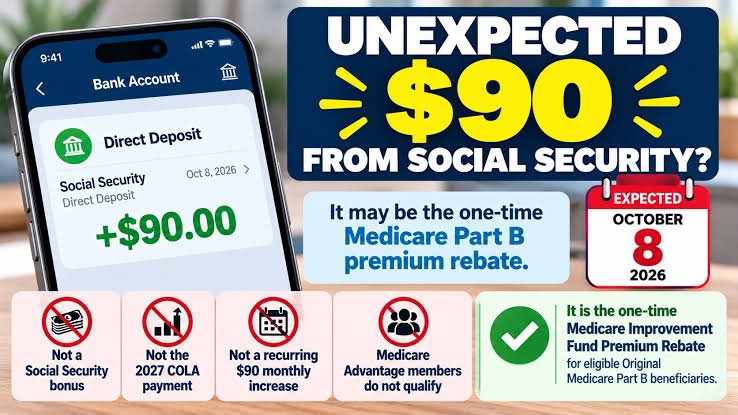
Social security extra deposit 90 Seeing an unexpected deposit in your bank account can raise an important question: Is this extra money part of your Social Security benefits, or is it a separate payment that needs to be verified? For retirees, people with disabilities, and Supplemental Security Income (SSI) recipients, even a relatively small additional deposit can make a difference when managing monthly expenses.
Searches for a “social security extra deposit 90” often reflect uncertainty about reports of an additional $90 payment, a change in a regular benefit, or a deposit that arrives separately from an expected monthly payment. However, an extra $90 is not automatically a new federal benefit available to every Social Security recipient.
The explanation depends on the beneficiary’s payment record, the type of benefits received, and whether the Social Security Administration (SSA) has made an adjustment to the account.
Understanding how these payments work can help beneficiaries distinguish a legitimate benefit adjustment from a misunderstanding or an unverified online claim.
Is There Really a $90 Extra Social Security Deposit?
A $90 deposit may be legitimate, but the amount alone does not establish its purpose. Social Security does not provide a universal extra payment simply because someone receives retirement, disability, or SSI benefits.
An additional deposit could reflect an individual benefit adjustment, a correction to a previous payment, or another payment-related circumstance. It could also come from a source unrelated to Social Security.
Beneficiaries should be cautious about headlines and social media posts claiming that everyone will receive an additional $90. Unless an announcement comes from an authoritative government source and clearly explains eligibility, payment dates, and applicable benefit programs, the claim should not be treated as confirmed.
Why Are People Talking About an Extra $90?
Several factors can create confusion about Social Security payments.
First, benefit amounts can change because of cost-of-living adjustments, changes in certain deductions, or corrections to a beneficiary’s record. These changes do not necessarily result in a separate deposit.
Second, some beneficiaries receive more than one type of payment. For example, someone may receive Social Security benefits and also qualify for SSI. Depending on the circumstances, the payments may follow different schedules.
Third, online discussions sometimes describe an individual payment adjustment as though it were a nationwide benefit. A report about one person’s additional deposit does not establish that other recipients qualify for the same amount.
The most reliable way to determine whether a $90 payment applies to an individual is to review the person’s official benefit information.
What Could Explain an Additional $90 Deposit?
There are several possible explanations for an unexpected deposit. The correct explanation depends on the beneficiary’s circumstances and the information recorded by the relevant agency.
1. A Correction to a Previous Benefit Payment
The Social Security Administration may review a beneficiary’s record and determine that a previous payment needs to be corrected.
If an adjustment results in additional money being owed, a beneficiary may receive a payment separate from the regular monthly benefit. The amount could be $90, but it could also be higher or lower.
A correction does not necessarily mean that the person’s ongoing monthly benefit will increase. It may address a specific period or an earlier calculation.
Beneficiaries should review any available payment explanation to understand which months or benefits the adjustment covers.
2. A Change in Benefit Calculations or Deductions
The amount deposited into a bank account is not always identical to the gross benefit amount.
For example, certain insurance premiums, withholding arrangements, or other applicable deductions can affect the amount a person receives. If a deduction changes or a previous calculation is corrected, the net payment may also change.
However, a $90 difference should not automatically be Social security extra deposit 90 attributed to a deduction adjustment. The beneficiary should compare the current payment details with previous benefit statements and look for an official explanation.
3. A Separate SSI Payment
Supplemental Security Income is a needs-based federal program for eligible older adults, people who are blind, and people with qualifying disabilities who meet the program’s income and resource requirements.
SSI is different from Social Security retirement and Social Security Disability Insurance (SSDI), even though the programs are administered by the same federal agency.
Some individuals qualify for both Social Security benefits and SSI. Consequently, they may see payments associated with different programs.
An unexpected $90 deposit could be connected to an individual SSI payment adjustment or another account-specific issue. It should not be assumed to represent a new SSI bonus or a payment available to all recipients.
4. A Retroactive or Previously Owed Payment
Sometimes, a beneficiary receives money associated with an earlier period rather than a new monthly benefit.
Such payments may occur when an eligibility decision, benefit calculation, or administrative review results in money being owed. The timing and amount depend on the individual case.
A retroactive payment may arrive separately from the person’s regular monthly deposit. If the amount is $90, the beneficiary should check whether the payment relates to an earlier benefit period.
5. A Deposit Unrelated to Social Security
Not every deposit received by someone who collects Social Security comes from the SSA.
A bank refund, insurance reimbursement, tax-related payment, or transfer from another source may appear near the date of a regular benefit payment. Similar timing can make unrelated transactions seem connected.
Reviewing the transaction description and asking the bank about an unfamiliar deposit can help identify its origin.
Who Might Qualify for an Additional Social Security Payment?
Eligibility for an additional payment depends on the reason the payment is being issued. There is no single eligibility rule for every possible $90 deposit.
The following groups may have payment questions related to their particular benefits.
Social Security Retirement Beneficiaries
Retirement benefits are generally based on a person’s covered earnings history and the age at which benefits begin.
A retiree may receive an adjusted payment if an applicable change or correction affects the person’s benefit record. However, receiving retirement benefits does not automatically qualify someone for a separate $90 payment.
Social Security Disability Insurance Recipients
SSDI provides benefits to eligible workers with qualifying disabilities who meet the program’s insured-status requirements. Certain family members may also qualify for benefits based on an insured worker’s record.
An SSDI recipient could receive an adjustment if the person’s individual circumstances warrant one. The amount and timing depend on the underlying reason for the payment.
Supplemental Security Income Recipients
SSI eligibility depends on financial and other program Social security extra deposit 90 requirements. Payment amounts can be affected by countable income, living arrangements, and other relevant factors.
An SSI recipient should verify any unexpected deposit carefully because a payment adjustment may relate to a particular eligibility period rather than represent a permanent increase.
People Receiving Both SSI and Social Security
Some beneficiaries receive both programs because their circumstances meet the requirements for each.
For these individuals, it is especially important to identify which program is associated with an additional deposit. Changes affecting one benefit may also influence the calculation of another, depending on the applicable rules.
Beneficiaries should rely on their individual records instead of assuming that a payment reported by someone else applies to them.
How to Check Whether a $90 Deposit Is Official
If an additional payment appears in your account, take a few practical steps before spending the money or assuming that your monthly benefits have increased.
Step 1: Review Your Bank Transaction
Check the transaction date, amount, and payment description. Compare the deposit with your usual Social Security payment.
Your bank may be able to provide additional information about the transaction’s origin. However, a bank statement alone may not explain why the payment was issued or whether it affects future benefits.
Step 2: Sign In to Your Official Social Security Account
Use the official Social Security Administration website to access your personal account and review available benefit information.
Look for your benefit amount, payment history, notices, and any explanation of a recent adjustment. The information available may vary depending on your benefit type and the circumstances of the payment.
Always access your account through the official government website rather than an unfamiliar link in a text message, email, or social media post.
Step 3: Read Any Notice About Your Benefits
An official notice may explain why your benefit amount changed or why a separate payment was issued.
Pay attention to whether the notice describes a one-time payment, a correction for a previous period, or a change to your ongoing monthly benefit.
These distinctions matter. A one-time deposit does not necessarily mean that the same amount will be added to every future payment.
Step 4: Contact the Social Security Administration if Necessary
If your account does not explain the deposit, contact the SSA through its official contact channels.
Be prepared to provide information needed to identify your case through a secure, official process. Never share your Social Security number, banking credentials, or verification codes with an unverified caller or website.
If the deposit appears to have come from another source, contact your bank or the organization identified in the transaction details.
Will Everyone Receive an Extra $90 in October 2026?
A specific payment amount and month should not be treated as confirmation of a nationwide benefit.
For October 2026, beneficiaries should verify any claim about an additional $90 through official SSA announcements and their own payment records. A social media post, online article, or search result that mentions the amount is not sufficient evidence that every eligible person will receive it.
It is also important to distinguish between a regular monthly benefit, a scheduled payment issued on a different date, and a genuinely additional payment.
The timing of a deposit can change for administrative or calendar-related reasons without creating a new benefit. Likewise, a payment adjustment for one beneficiary does not establish a general payment program for everyone else.
When checking a claim, look for an official announcement that identifies the program, eligibility requirements, payment amount, and expected date. If those details are missing, the claim may be incomplete or misleading.
Could a $90 Deposit Be a Cost-of-Living Adjustment?
The Social Security cost-of-living adjustment, commonly called the COLA, is intended to help benefits keep pace with changes in consumer prices.
When a COLA applies, it generally changes eligible beneficiaries’ ongoing benefit amounts according to the applicable rules. It is not automatically a separate $90 bonus paid to everyone.
A beneficiary’s dollar increase can differ from another person’s increase because benefit amounts vary. Deductions and other factors can also affect the amount deposited into a bank account.
Therefore, an increase of approximately $90 in a monthly deposit should not automatically be described as a special extra payment. It may reflect a change in the regular benefit, an adjustment to deductions, or another individual circumstance.
To understand a particular change, compare Social security extra deposit 90 official benefit statements and determine whether the stated benefit amount or only the net deposit changed.
How Social Security Payment Dates Work
Social Security retirement and disability payments generally follow a schedule determined by the program and, for many beneficiaries, the beneficiary’s date of birth.
Many retirement and SSDI recipients receive payments on Wednesdays according to the SSA’s scheduling rules. Some beneficiaries follow different arrangements because of when they first began receiving benefits or because they receive SSI.
SSI payments are generally scheduled for the first day of the month. When that day falls on a weekend or federal holiday, the payment is usually issued on the preceding business day.
As a result, some months may appear to contain two SSI deposits. In certain cases, this happens because the next month’s payment is sent early, not because the recipient is receiving an extra monthly benefit.
Understanding this distinction can help prevent confusion when reviewing bank statements or reading claims about additional payments.
A separate deposit can still represent money owed to an individual, but its date alone does not prove that it is a special government bonus.
Protect Yourself From False Social Security Payment Claims
Claims about unexpected government payments can attract people who want financial assistance or are worried about missing out on benefits. Scammers may exploit that interest by promising a payment in exchange for personal information.
Be cautious if a message claims that you must pay a processing fee to receive an extra Social Security deposit, provide your bank password, or click an unfamiliar link to activate a benefit.
The following warning signs deserve attention:
- A message guarantees that every recipient will receive exactly $90 without providing an official explanation.
- A website requests payment to release a government benefit.
- A caller pressures you to share sensitive personal information immediately.
- A text message includes an unfamiliar link and claims your benefits will be canceled unless you act.
- A social media post presents an unverified payment date as an official announcement.
If you receive a suspicious message, do not use the contact Social security extra deposit 90 information or links provided in that message. Instead, independently locate the official government website or contact the relevant agency through verified channels.
You should also avoid sharing screenshots of your bank statement or benefit account publicly because they may expose personal information.
Frequently Asked Questions
1. Is the $90 Social Security extra deposit real?
A $90 deposit may be legitimate for an individual, but the amount alone does not prove that it is a new federal benefit. Check your official benefit records and payment explanation to establish the source.
2. Will all Social Security recipients receive an extra $90?
There is no basis for assuming that every retirement, SSDI, or SSI recipient will receive an additional $90. Eligibility depends on whether an applicable payment program or individual adjustment exists.
3. When will the $90 extra Social Security payment arrive?
There is no universal payment date for an unverified $90 benefit. If an individual adjustment is approved, its timing depends on the reason for the payment and the applicable processing arrangements.
4. Can SSI recipients receive an additional $90?
An SSI recipient may receive an adjustment or another payment if the person’s circumstances and applicable program rules support it. That possibility does not establish a new $90 payment for all SSI recipients.
5. Does an extra deposit mean my monthly Social Security benefits have increased?
Not necessarily. A deposit may be a one-time correction or payment for an earlier period. Check your benefit statement to determine whether your ongoing monthly amount has changed.
6. Why did I receive two Social Security deposits in one month?
Possible explanations include a separately issued adjustment or a payment schedule that places two deposits within the same calendar month. For SSI, an early payment before a weekend or federal holiday can mean that the next month’s benefit arrives before the current month ends.
7. How can I verify a Social Security payment?
Review your bank transaction, sign in to your official SSA account, read any benefit notices, and contact the agency if the payment remains unexplained.
8. Is the $90 payment connected to the Social Security COLA?
Not necessarily. A cost-of-living adjustment can change regular benefit amounts, but a $90 deposit could have another explanation. Verify whether your official benefit amount changed and review the relevant notice.
9. Do I need to apply for the extra $90?
There is no universal application for an unverified $90 Social Security payment. Follow official instructions for any program or benefit adjustment that actually applies to your circumstances, and do not pay a third party to claim a supposed bonus.
10. What should I do if I receive an unexpected deposit?
Confirm the transaction with your bank and Social security extra deposit 90 check your official benefit information. If the source remains unclear, contact the appropriate organization before treating the money as a permanent benefit increase. Avoid returning money to an unknown person or following unsolicited instructions without independently verifying the situation.
Conclusion
The search for a “social security extra deposit 90” reflects a reasonable question about whether an additional payment may be available to beneficiaries. However, an unexpected $90 deposit does not automatically represent a new government benefit, and there is no reason to assume that every Social Security or SSI recipient qualifies for the same payment.
The most reliable approach is to review the bank transaction, check official benefit records, read relevant notices, and contact the SSA when necessary. Beneficiaries should also distinguish between a one-time adjustment and a lasting change to their monthly benefits.
By relying on verified information instead of unconfirmed online claims, Social Security recipients can better understand their payments, protect their personal information, and make informed decisions about their monthly budgets.
